
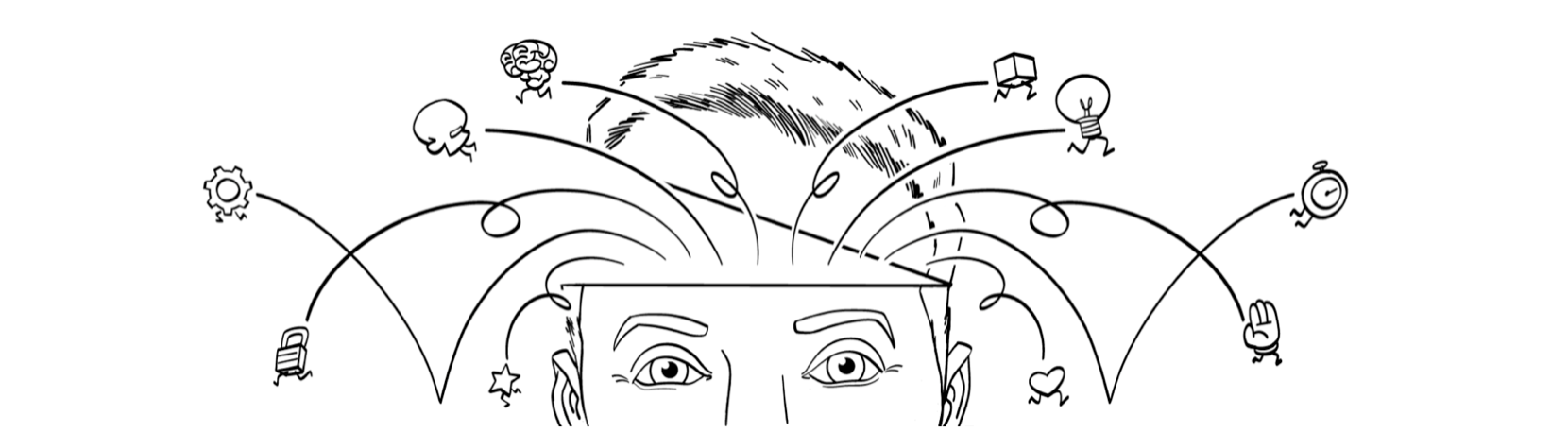
In this week's edition of Idea Surplus Disorder, we'll explore why purpose at work is such a powerful engagement engine, how eroding trust shows up long before leaders notice it, and why we need better tools for measuring trust the same way we measure any other strategic asset.
We’ll look at organizational “debt” beyond the financial kind, practical ways to repurpose the time AI saves you, and a smarter approach to reading so you actually remember more.
Plus: the long-term costs of quick wins, when risks are worth taking, and one delightfully revealing Thanksgiving icebreaker.
And as always, you’ll find a mix of fun finds, practical insights, and thought-provoking quotes to help you lead, live, and think more intentionally.
I'm Matt Homann, and I'm glad you're here.
Ideas + Insights
Employees with a strong sense of purpose at work are 5.6 times as likely to be engaged in their jobs as those with a low sense of purpose. They are also much less likely to feel burned out or be watching for or actively seeking a new job. These outcomes reflect better individual experiences at work and are associated with improved organizational outcomes, including productivity and profitability.
... as trust in leaders erodes:
In Glassdoor reviews that mention senior leadership or management, the share of reviews that mention “disconnect” has increased 24% from 2024 to 2025. Similarly, related terms like misaligned (+149%), miscommunication (+25%), hypocrisy (+18%) and distrust (+26%) have all surged in Glassdoor reviews over the last year.
And if trust is so important, why aren't we measuring it better?
Trust measurement only works if leaders have the courage to expose blind spots and the discipline to respond. Like financial audits or compliance reviews, the point isn’t to prove you’re perfect, it’s to demonstrate that you’re managing risk through a rigorous and targeted process. Measuring executive trust requires an intentional approach, but the rewards are undeniable: a workplace culture where employees feel valued, stakeholders feel confident, and leaders are empowered to drive organizational success. When nurtured systematically, trust becomes the foundation not just for operational excellence, but for long-term resilience in an increasingly unpredictable business climate.
Organizations incur lots of different types of debt (technical, cultural, etc.) but rarely measure anything but the financial kind well:
When borrowing the “debt lens,” here’s a framework anyone can use:
- Name It: Be explicit — “This is debt.” Label the shortcut and its likely cost.
- Track It: Maintain a register, backlog, or log of known debts. Visibility prevents denial.
- Plan for Repayment: Dedicate cycles, budgets, or policy reviews to address it.
- Balance Incentives: Reward long-term resilience, not just quick wins.
- Communicate Transparently: Treat debt as part of the system, not a hidden flaw.
Read a lot? You're likely highlighting too much:
Highlight and underline very selectively – ideally no more than 10–20% of the text. Mark only the most important points or phrases that capture the essence. Why It Works: Over-highlighting is a form of mental laziness that can hinder memory (you end up bypassing the decision of what’s truly important).
Want to find ways to leverage the time in your job that AI frees up? Try this:
AI creates gaps in your work—30 seconds while it generates code, two minutes while it fixes your test, five minutes while it researches. During the next one, don't scroll. Stare at what you're working on and write:
What else could I be doing right now on this project? What detail am I skipping that I'm curious about? What part of this work do I keep rushing past?
Don't force it. Just notice what comes up. Do this for a week. You're not looking for a grand revelation—you're looking for a pattern in what keeps showing up.
"No scientific discovery is named after its original discoverer.” Stigler’s law is itself an example of Stigler’s law.
The long-term consequences of quick wins:
Quick wins can feel smart in the moment. They create momentum, please stakeholders, and deliver visible results. But every shortcut has a cost. When we fail to account for that cost, we’re not just buying time — we’re borrowing from the future. And the future always comes knocking.
On the other hand, we should take risks when...
(1) the worst outcome is manageable and (2) the best outcome is life-changing. Look for opportunities where it won't kill you if it goes poorly, but you'd be blown away if it goes well.
Finally, here's a fun icebreaker for the Thanksgiving dinner table:
What is a “rich person thing” you would be totally into if you became rich?
Fun Finds
- Dithering
- Deceptive Practices on a Need to Know Basis
- Corners of the Internet Database
- The Two Types of Jokes
- A brief history of people talking to computers
- Unparalleled Misalignments: words in phrases that match, but really don't
- Mail.google.com/mail/#sub shows you all the gmail emails you are subscribed to and makes it easy to unsubscribe.
- A world map of influential ideas.
Words of Wisdom
The logic of algorithms tends to repeat what “works,” but art opens up what is possible. Not everything has to be immediate or predictable. Defend slowness when it serves a purpose, silence when it speaks and difference when evocative. Beauty is not just a means of escape; it is, above all, an invocation. When cinema is authentic, it does not merely console but challenges. It articulates the questions that dwell within us and sometimes even provokes tears that we did not know we needed to express. – Pope Leo XIV
What can we gain by sailing to the moon if we are not able to cross the abyss that separates us from ourselves? – Vivek Murthy
People ask you for criticism, but they only want praise. – W. Somerset Maugham
Attention is the rarest and purest form of generosity. – Simone Weil
Art is the act of making things we don’t need, but which make the world a better place. — Brian Eno
You can be relevant as hell and still be boring as f*ck. – Martin Weigel
When you fall in love with the process rather than the outcome, you don't have to wait to be happy. – Shane Parrish
We act as though comfort and luxury were the chief requirements of life, when all that we need to make us happy is something to be enthusiastic about. – Charles Kingsley
Up Next From Filament
Every month, Filament delivers an incredible mix of free programming and professional development. You can find links to sign up for all of our upcoming events, including PlayDays, Wavelength, NSFW, and SuperCollider here.